Digitalisation, Trade Flows, Multimodal Corridors and the 2026 FIATA World Congress

Digitalisation: FIATA Shares Industry Perspectives on Paperless Trade at APEC Workshop
On 25 August 2026, FIATA participated in the Asia-Pacific Economic Cooperation (APEC) Sub-Committee on Customs Procedure workshop, “Impact of the Electronic Bill of Lading on the Expedited Clearance of Goods: Implications for Foreign Trade Operators,” held in Dalian, China. Organised by Peru's Ministry of Foreign Trade and Tourism (MINCETUR) under an APEC-funded project, the workshop brought together government officials, customs authorities, industry representatives and international organisations to discuss how electronic Bills of Lading (eBLs) can support trade facilitation, paperless trade and more efficient cross-border procedures.
Representing FIATA, Ms Andrea Tang, Director of Legal and Regulatory Affairs, joined a panel alongside experts from the Digital Container Shipping Association (DCSA), MSC and BIMCO to discuss logistics-sector readiness for eBL adoption. The panel explored the practical steps needed to integrate eBLs into logistics workflows, including issuance, transfer, endorsement, surrender and cargo release, as well as the barriers that continue to limit wider adoption.
FIATA emphasised that successful digitalisation requires more than replacing paper with electronic documents. Effective implementation depends on understanding the distinct roles that different actors perform across the supply chain, the value they contribute, and the information they hold. Freight forwarders, carriers, ports, customs authorities, banks and other stakeholders each generate and rely upon different sets of data. Unlocking the full benefits of electronic Bills of Lading therefore requires trusted mechanisms to connect, share and reconcile information across these actors, supported by interoperable systems, common data standards, trusted digital identities and harmonised legal frameworks.
Drawing on FIATA's experience with the digital FIATA Multimodal Transport Bill of Lading (eFBL), FIATA highlighted the results of pilot projects conducted using real-life commercial transactions along international transport corridors. These pilots demonstrated the practical feasibility of issuing, transferring and managing electronic negotiable transport documents in live trade environments, helping to bridge the gap between legal frameworks and day-to-day commercial operations. FIATA reaffirmed its commitment to supporting governments, customs authorities and industry stakeholders in advancing paperless trade through practical implementation projects, interoperable standards and evidence-based policy development. By working with jurisdictions to strengthen the legal, operational and technical foundations for electronic trade documents, FIATA aims to help ensure that secure, trusted and internationally recognised digital trade processes can be adopted across global supply chains in an accessible and practical manner for companies of all sizes around the world.
2026 FIATA World Congress | Session Insights:
Navigating Fragmentation, Uncertainty and Shifting Trade Flows

In the recently published September 2026 issue of FIATA Review, Ms Anna Joubin-Bret, Secretary of United Nations Commission on International Trade Law (UNCITRAL), and Director of the, International Trade Law Division, explores the United Nations Convention on Negotiable Cargo Documents and its potential to reshape how negotiable documents are used across multimodal transport.
Adopted by the United Nations General Assembly in December 2025, the Convention establishes a harmonised legal framework for negotiable cargo documents across transport modes, supporting both paper-based and electronic documents. It could strengthen access to trade finance, improve legal certainty and create new opportunities for freight forwarders and other actors involved in international trade.
The Convention is particularly relevant as the logistics industry continues to move towards more integrated, digital and multimodal supply chains. Its recognition of electronic negotiable cargo documents also supports the broader transition towards digital trade documentation.
The article provides a session preview for Panel 1: The New Supply Chain Landscape: Navigating Fragmentation, Uncertainty and Shifting Trade Flows at the 2026 FIATA World Congress, where speakers will examine how changing trade patterns, tariff uncertainty, cross-border e-commerce and emerging regions are reshaping global supply chains.
For a broader look at the digitalisation of trade, the article can be complemented by two additional articles in the September issue, which explore the development of digital trade, electronic documentation and the standards and infrastructure needed to support more connected supply chains. Together, these contributions offer useful context ahead of the discussions in Milan.
Read Anna Joubin-Bret’s article in the latest FIATA Review and prepare for the conversation in Milan, 6–9 October.
Read Ms Anna Joubin-Bret's article here
Do not forget to register for the 2026 FIATA World Congress!
2026 FIATA World Congress | Session Insights:
Restructuring Multimodal Corridors

Mr Aleksandr Kuzmenko, Secretary General of the Intergovernmental Organisation for International Carriage by Rail (OTIF), examines how rail transport can adapt to a changing global trade environment and play a stronger role in multimodal supply chains, in the recently published September 2026 issue of FIATA Review.
As trade routes adjust and volumes shift, weaknesses within existing corridors can become increasingly visible. While investment in infrastructure and rolling stock remains essential, Kuzmenko highlights the growing importance of a third layer: digitalisation.
Technical and legal interoperability are central to this transformation. Common standards, compatible data systems and harmonised digital documentation can help overcome some of the procedural barriers that continue to create friction across borders and between transport modes. Modernising the legal framework for electronic transport documents is therefore an important part of making international rail freight more efficient and predictable.
The article also highlights OTIF’s work to support digital transport documentation, including developments under the Convention concerning International Carriage by Rail (COTIF), and the role of electronic information in the safe transport of dangerous goods.
These issues connect directly with Panel 2: Restructuring Multimodal Corridors: Tackling Friction and Bottlenecks at the 2026 FIATA World Congress. The session will examine persistent operational and procedural bottlenecks, cross-border recognition of transport documents, data interoperability and the governance models needed to improve corridor performance.
Read Mr Aleksandr Kuzmenko’s article for a preview of the discussion in Milan, 6–9 October 2026.
Read Mr Aleksandr Kuzmenko's article here
Do not forget to register for the 2026 FIATA World Congress!
2026 FIATA World Congress | Session Insights:
Cybersecurity, Single Windows and Connected Trade

Mr Nachi Mendelow, Senior Business Development Executive and Global Customs Domain Owner for CargoWise, examines why going digital is no longer enough to create connected trade in the recently published September 2026 issue of FIATA Review.
As global trade becomes increasingly digital, new platforms and electronic messages continue to sit alongside legacy systems, with shipment information often re-entered, reformatted and revalidated as it moves between shippers, forwarders, carriers, ports and border agencies. Mendelow highlights the need to move towards trusted data flows that can be captured once, verified and securely reused throughout the transaction.
Interoperability, data quality and common standards are central to this transition. The article looks at the growing role of Maritime Single Windows, while highlighting the gap that remains between digital submission and genuinely connected systems. Cybersecurity adds another layer of complexity, with every new interface and participant creating additional points of exposure across the supply chain.
The article also explores how secure interoperability can support compliance, data sharing and risk management, and the importance of coordination between governments, ports, carriers, freight forwarders and technology providers.
These issues connect directly with Panel 3: Supply Chain in the Digital Age: Cybersecurity, Single Windows and Connected Trade at the 2026 FIATA World Congress. The session will examine cyber risk at ports, the practical implementation of Maritime Single Windows, the integration of small and medium-sized enterprises into digital port ecosystems, and the application of international cybersecurity frameworks.
Read Mr Nachi Mendelow’s article for a preview of the discussion in Milan, 6–9 October 2026.
Read Mr Nachi Mendelow's article here
Do not forget to register for the 2026 FIATA World Congress!
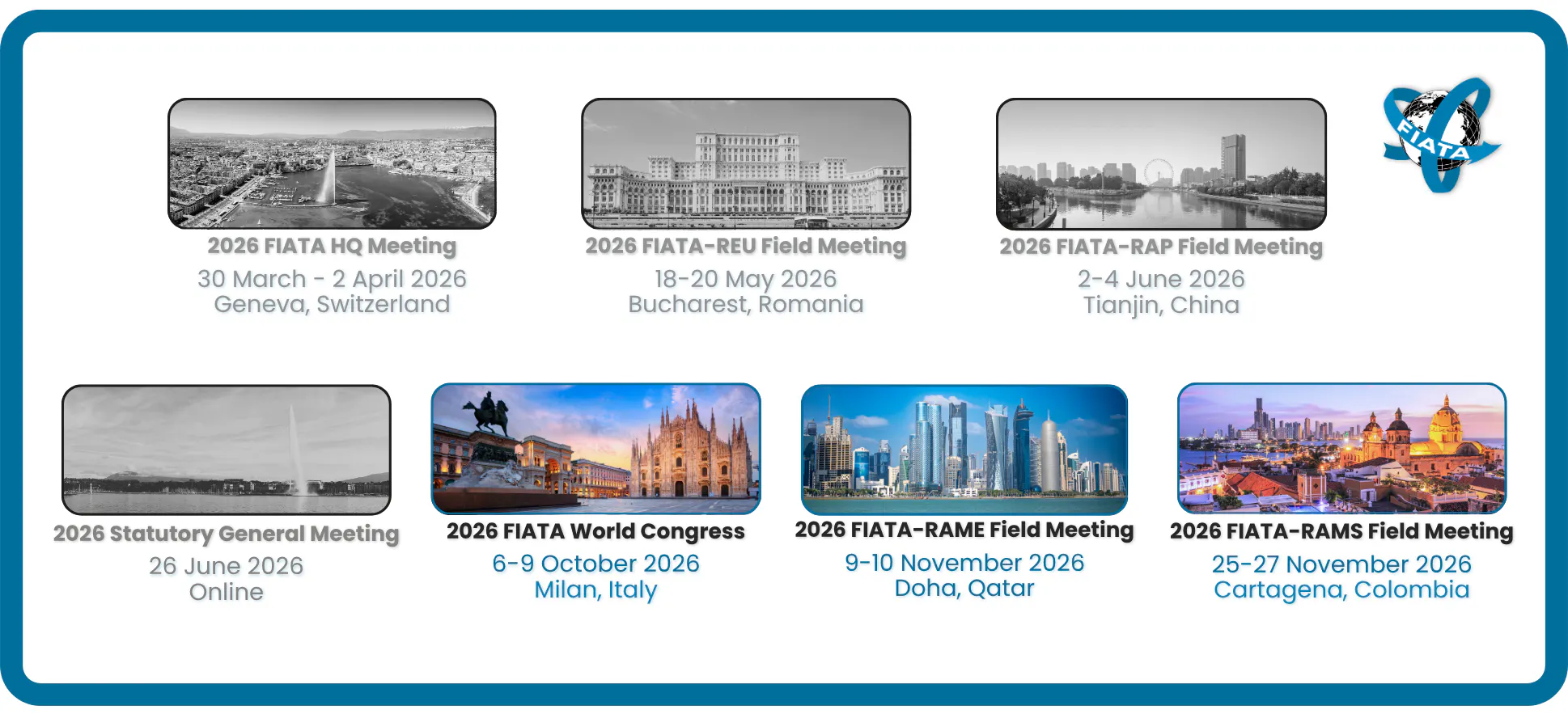
Upcoming FIATA Events