
2027 HQ Meeting Early Bird Rates, Industry Insights and Advocacy Updates
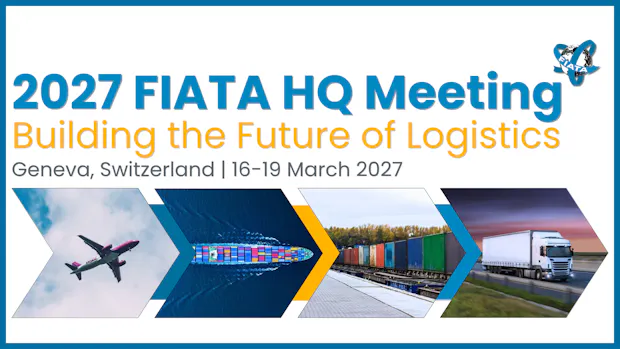
2026 FIATA HQ Meeting: Secure Your Early Bird Rates
The 2027 FIATA HQ Meeting will take place in Geneva, Switzerland, from 16 to 19 March 2027, bringing together FIATA members, partners and international stakeholders under the theme Building the Future of Logistics.
The meeting will offer a platform for exchange, collaboration and engagement on key priorities shaping the global freight forwarding and logistics industry. The programme will feature FIATA panel discussions, expert workshops, networking opportunities, a Welcome Cocktail and an Ethiopian Night! View the full programme here.
The 2027 FIATA HQ Meeting will mark the first opportunity of the year for the FIATA Membership to come together, reconnect and exchange on shared priorities for the future of the industry.
Take advantage of the early bird registration rate until 31 December 2026! Register now to secure your place at the 2027 FIATA HQ Meeting and join the FIATA community in Geneva.
Industry Outlook: Interview with Dr Stéphane Graber on Challenges and Opportunities for 2027
FIATA Director General, Dr Stéphane Graber joined Mr Mike King, host of The Freight Buyers’ Club, for an interview during the International Association of Ports and Harbors (IAPH) World Ports Conference in London. The conversation looked ahead to what 2027 may hold for freight forwarders and the shippers who rely on them.
Dr Graber spoke about the growing role of freight forwarders as orchestrators of global supply chains and as shock absorbers in times of disruption. The discussion also covered protectionism, data sharing at ports, the slow uptake of electronic bills of lading by banks, and the role of artificial intelligence (AI), with Dr Graber noting that “AI is only as good as the people who use it”.
Among the opportunities ahead, Dr Graber highlighted the United Nations Convention on Negotiable Cargo Documents, signed in Accra on 26 October 2026, describing it as a development that “nobody 10 years ago would have imagined”. The Convention extends the benefits of negotiable documents beyond maritime transport to rail, road and air.
Members can watch the full interview to hear Dr Graber’s views on the challenges facing the industry in 2027 and what the new Convention could mean for trade finance, electronic documents and landlocked territories.
International Trade and Law: FIATA Highlights the Role of Trade Finance in Multimodal Supply Chains

FIATA brought the freight forwarding perspective to discussions on trade resilience and finance at the ICC Banking Commission meeting in London on 10 November, highlighting a central challenge for increasingly flexible and multimodal supply chains: when cargo changes route or mode, the documents, data and financing need to be able to follow. Ensuring that they do is not only important for resilience, but also for widening access to trade finance and enabling more businesses and markets to participate in global trade. Representing FIATA on the panel “Financing Trade Resilience: Navigating Geopolitics and Supply Chain Risk”, FIATA's Director of Legal and Regulatory Affairs, Ms Andrea Tang, highlighted how freight forwarders respond when disruption affects established trade routes and the importance of reducing friction at the interfaces between modes, operators, borders and systems, where significant costs and delays can arise. These costs are particularly consequential for MSMEs, which have less capacity to absorb unexpected logistics costs, delays and longer financing cycles.
Digitalisation can help reduce this friction, but interoperability across the entire trade ecosystem, including the financial sector, is essential if trade finance is to keep pace with increasingly digital and multimodal trade. The latest FIT Alliance digital Bill of Lading (eBL) survey illustrates this challenge: eBL adoption continues to grow, yet interoperability and platform fragmentation remain a major barrier, with banks facing particularly significant interoperability challenges. The next challenge is therefore not simply to digitalise trade documents, but to ensure that they can be received, verified and relied upon across the full trade and financing chain.
This is also where the United Nations Convention on Negotiable Cargo Documents, known as the Accra Convention, can make an important difference. The London discussion built on FIATA’s participation just two weeks earlier in the signing ceremony for the Convention in Accra on 26 October. Twenty-six States signed the Convention as it opened for signature, marking significant momentum towards a uniform legal framework for negotiable cargo documents across transport modes.
In Accra, FIATA highlighted the Convention’s potential to open new financing opportunities for goods moving by road, rail and multiple modes. This is especially significant for MSMEs and for landlocked and emerging markets that depend heavily on multimodal and overland transport corridors to connect with international markets. While negotiable bills of lading have traditionally supported the financing of maritime trade, equivalent possibilities have been more limited for goods moving by other modes. The Convention provides an opportunity to help close that gap, giving businesses greater possibilities to use goods in transit as part of the financing of international trade.
Building on the longstanding experience of the FIATA Multimodal Transport Bill of Lading (FBL) and the growing use its digital counterpart, the eFBL, FIATA emphasised in Accra that the next step must be to turn this legal opportunity into practical commercial solutions. This requires real-world business cases involving not only forwarders and their customers, but also banks, technology providers, transport operators and public authorities from the outset. Legal certainty is an essential foundation for this transition, but it is only part of the equation. Banks must also have confidence that they can receive, verify, transfer and rely upon electronic trade documents and the data associated with them. Trusted and high-quality data, interoperability and recognition across different systems will therefore be crucial to translating the Convention into broader access to trade finance.
FIATA is actively helping to connect these elements through its eFBL business cases across key multimodal transport corridors. These practical experiences demonstrate how a negotiable electronic multimodal transport document and its underlying data can accompany the physical movement of goods across modes and systems, while exploring how these solutions can support trade finance in real transactions. FIATA is also working with the International Chamber of Commerce (ICC) and the Global Shippers Forum on practical guidance to support implementation of the NCD Convention, which will be launched shortly.
Together, FIATA’s engagements in London and Accra underline an increasingly important message: resilient trade requires resilient and accessible trade finance. As supply chains become more agile, digital and multimodal, financing must be able to evolve with them. By combining legal certainty with trusted data and interoperability, the Accra Convention offers an opportunity not only to make existing trade more resilient, but also to bring more businesses, corridors and markets within reach of trade finance and global trading opportunities.
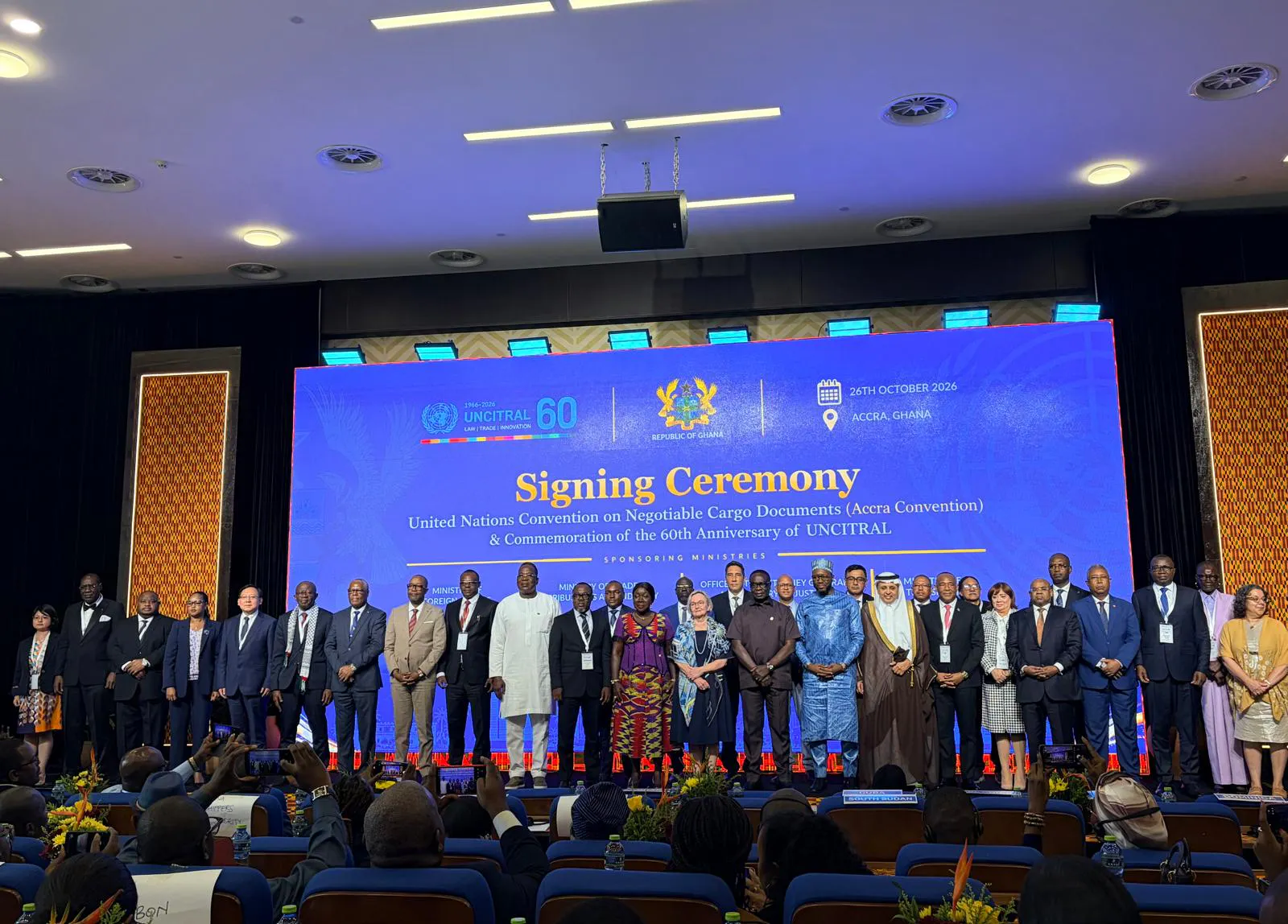
Read the official press release on the landmark signing of the Accra Convention
Advocacy: FIATA Participates at OTIF Work on Digital Transport Documents and Rail Liability
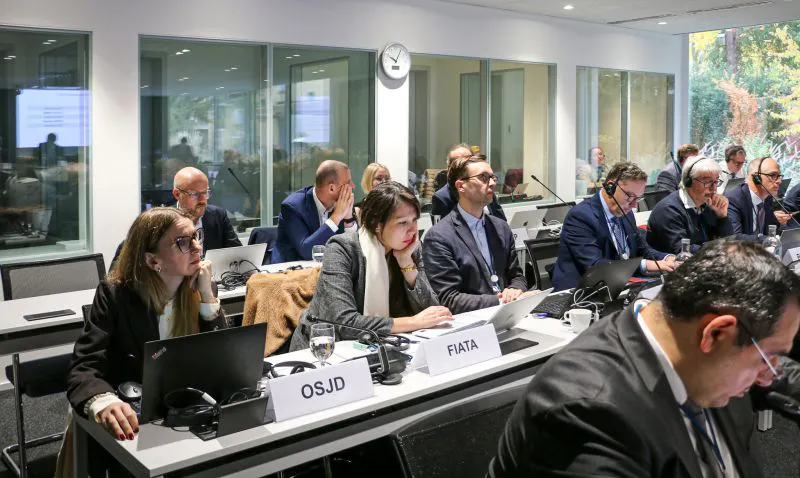
On 3 November 2026, FIATA, represented by Ms Margarita Kato, FIATA International Trade Law Officer, attended the 10th Session of the ad hoc Committee on Legal Affairs and International Cooperation of the Intergovernmental Organisation for International Carriage by Rail (OTIF) in Bern, Switzerland.
The session continued the Committee's work on digitalisation in international rail freight, with a focus on enabling the use of electronic transport documents under the CIM Uniform Rules. The Committee also continued its discussion on liability for loss or damage caused by a railway vehicle, following on from its previous session.
FIATA's participation reflects its continued engagement in international discussions on the digitalisation of transport documents and the legal frameworks relevant to freight forwarders, and underlines the importance it places on following developments that affect the sector.
Upcoming FIATA Events
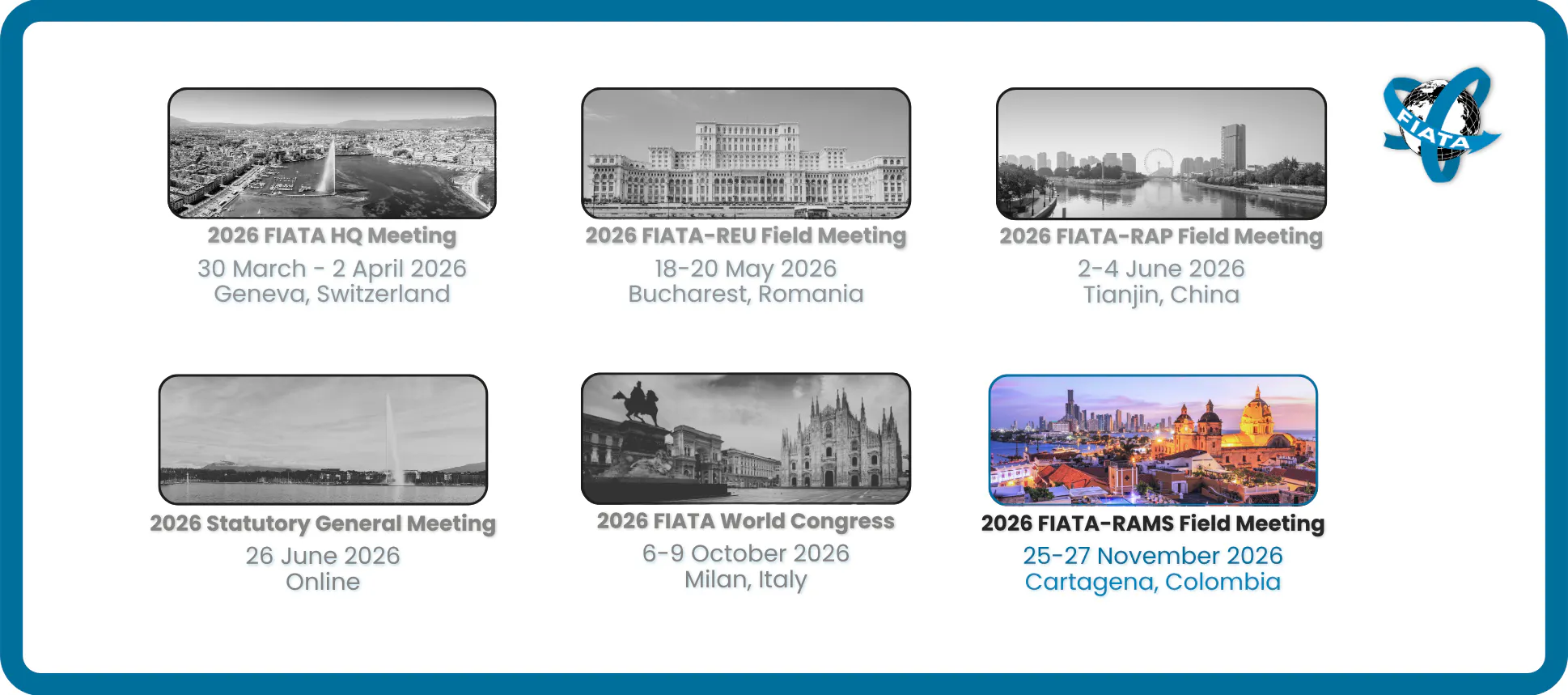
Do not miss the final opportunity in 2026 to meet, connect and exchange with the FIATA community and its leadership at the 2026 FIATA-Region Americas Field Meeting in Cartagena, 25-27 November 2026.